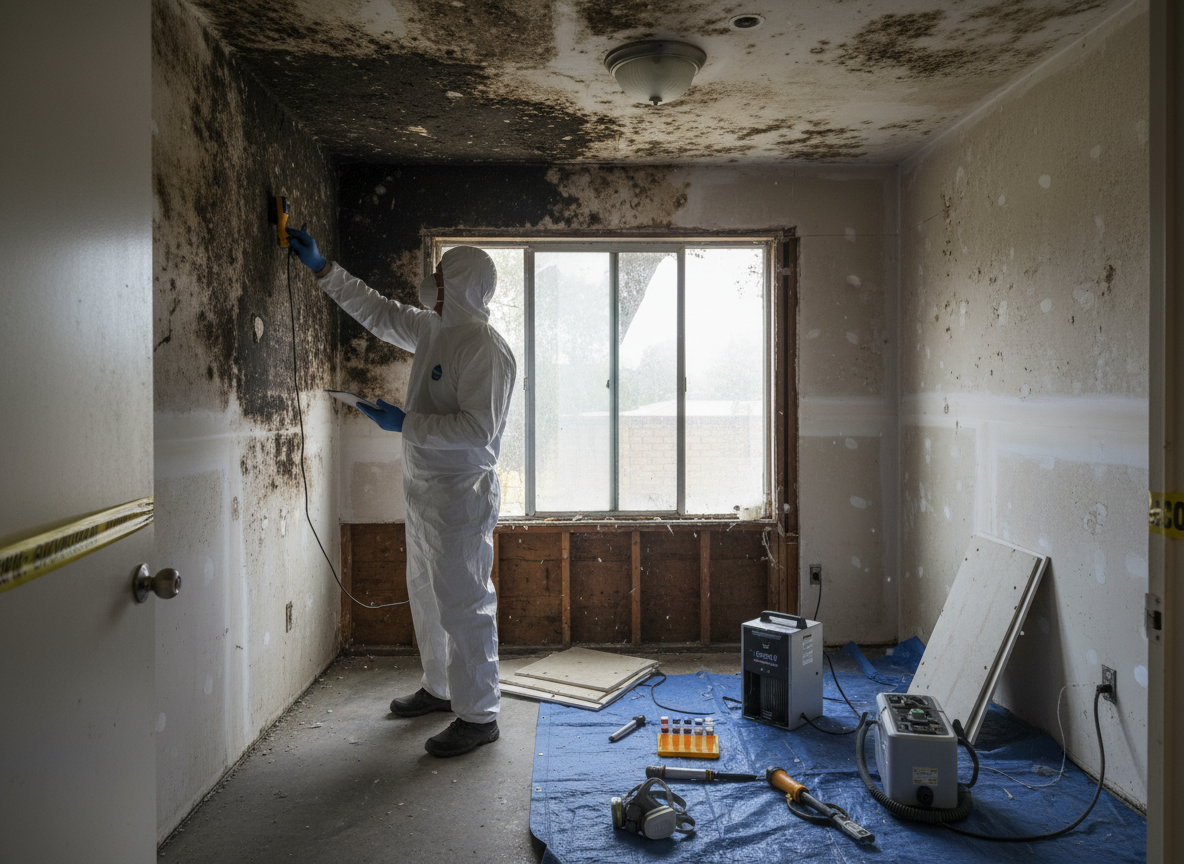
Granada Hills homes, many built in the 1950s through 1970s with stucco exteriors and slab foundations, often hide moisture issues in wall cavities and underfloor spaces. Warm Mediterranean summers followed by mild winters let small roof or plumbing leaks persist without obvious signs until black mold colonies form. Inspectors must check attics, crawlspaces, and areas around O'Melveny Park drainage paths where soil saturation can push water toward Knollwood lots.
Air sampling and surface swabs are standard, but in Los Angeles County older stock the real work lies in moisture meter readings behind baseboards and in HVAC returns. Hot summer temperatures can mask active growth until fall humidity spikes, so inspections include thermal imaging to locate cold spots created by hidden water. Properties near Northridge and Porter Ranch share similar hillside drainage patterns that funnel runoff into garages and lower levels.
Code requirements in Granada Hills emphasize proper ventilation in bathrooms and laundry rooms, yet many homes still rely on single-pane windows that allow condensation. Edge cases include mold growth inside wall insulation after minor earthquakes shift foundations and create new entry points for moisture. A full inspection documents every accessible area and notes any Los Angeles County permit history that might affect remediation access.
Technician insight
In Granada Hills, the thing that catches most people out with black mold inspection is hidden moisture trapped behind stucco on pre-1970 homes after mild winter rains allow slow leaks from O'Melveny Park slopes to reach foundations without obvious interior water stains.
Crawlspace Odor in Knollwood
A Knollwood homeowner reported a persistent musty smell near the Granada Hills Recreation Center. Inspection located elevated moisture under the slab from seasonal drainage. Air samples confirmed black mold presence in insulation. The report outlined exact locations and next steps for targeted removal.
How it works
- 1
Initial Site Walk
Technician reviews visible signs of moisture and odor throughout the home, noting construction type and any recent water events.
- 2
Moisture Mapping
Non-invasive meters and thermal imaging locate hidden damp areas behind walls, under slabs, and in attics common to Granada Hills housing.
- 3
Sampling and Documentation
Air and surface samples are collected from affected zones, with photos and notes tied to specific rooms and building materials.
- 4
Report Delivery
Written findings include location details, spore counts, and recommendations for next steps without any remediation work performed during inspection.
Pricing
Inspection cost depends on square footage, number of samples required, and access difficulty in older Granada Hills homes.