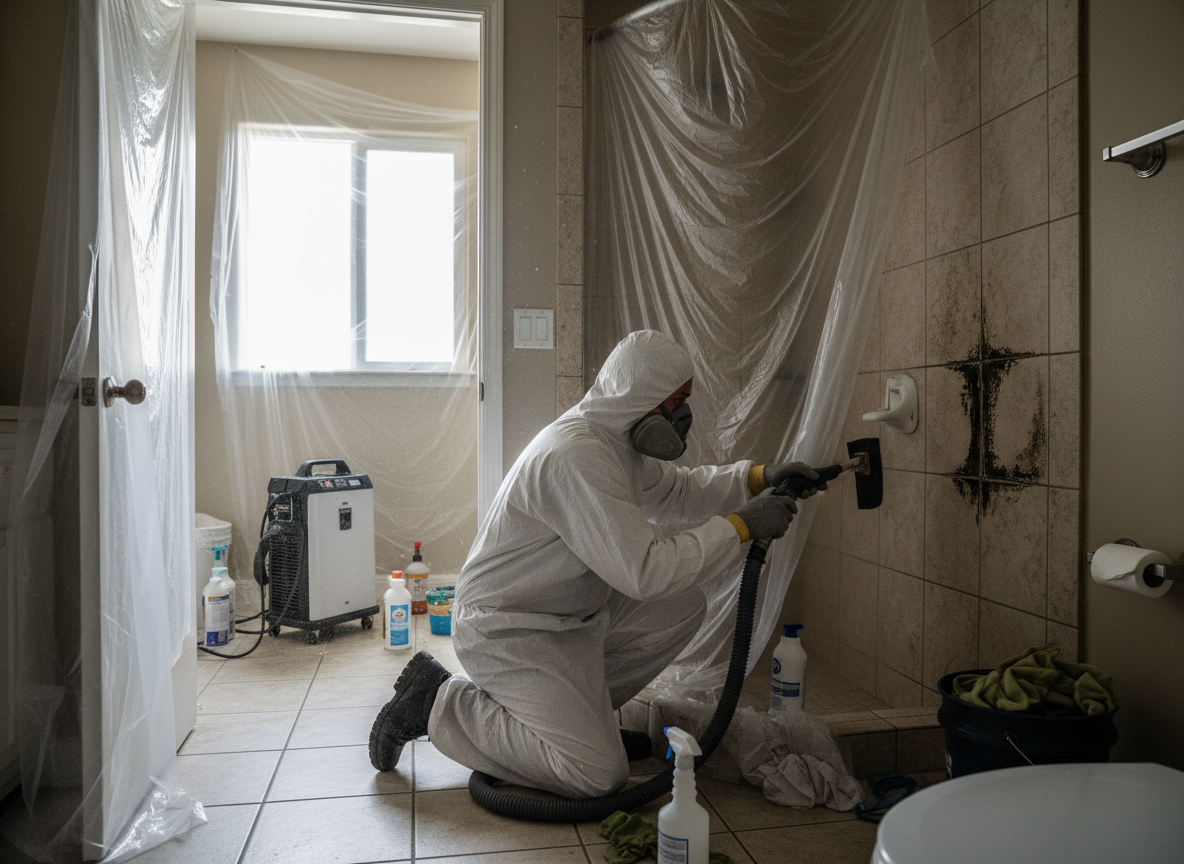
Bathroom mold in Granada Hills often starts behind tile or in shower walls where older copper or galvanized pipes from the 1950s and 1960s develop pinhole leaks. The warm Mediterranean climate brings hot summers that increase indoor humidity when windows stay closed, while mild winters reduce the urgency homeowners feel to investigate small stains. We inspect with moisture meters and borescopes to locate hidden growth without unnecessary demolition in these ranch-style homes common near O'Melveny Park and the Granada Hills Recreation Center.
Containment is critical because many Granada Hills bathrooms share walls with adjacent bedrooms or closets. We set up negative air machines and seal off HVAC returns to prevent spores from traveling through the ductwork typical in homes built before modern ventilation codes. Removal includes cutting out affected drywall or backer board, HEPA vacuuming, and applying antimicrobial treatments that penetrate porous surfaces without leaving residue that could affect tile grout or fixtures.
Drying follows with commercial dehumidifiers sized for the square footage, often running longer in the humid summer months when outdoor air holds more moisture. Final clearance testing confirms spore counts match outdoor baselines before walls are closed. Homes in Knollwood and near Porter Ranch frequently require extra attention to window condensation points where single-pane glass meets stucco exteriors.
Technician insight
In Granada Hills, the thing that catches most people out with bathroom mold removal service is the way 1960s slab-on-grade homes around Knollwood trap moisture under shower pans when the original drain lines corrode, and the mild winters mean no one notices until the floor tiles start lifting.
Shower Leak Behind Tile in Knollwood
A homeowner saw black spots along the baseboard after a recent hot spell. Inspection revealed a slow leak at the original shower drain pipe that had soaked the subfloor and wall cavity. We contained the room, removed the lower three feet of drywall and tile, treated the framing, and ran drying equipment for four days. Air tests cleared the space and the bathroom was ready for new finishes without further spread.
How it works
- 1
Inspection and Moisture Mapping
We examine the bathroom, adjacent walls, and ceiling using meters and scopes to identify all affected areas without guessing.
- 2
Containment Setup
Plastic barriers and negative air pressure isolate the space to stop spores from moving into living areas or HVAC systems.
- 3
Removal and Cleaning
Affected materials are removed, surfaces are HEPA cleaned, and antimicrobial agents are applied to remaining structure.
- 4
Drying and Verification
Equipment dries the space, followed by air sampling to confirm mold levels have returned to normal before reconstruction begins.
Pricing
Cost depends on square footage affected, depth of hidden growth behind tile or drywall, and whether HVAC cleaning is required in these older Granada Hills homes.