Granada Hills homes built in the 1950s and 1960s often feature stucco exteriors and raised foundations that trap humidity during mild winters. When leaks from aging plumbing or roof valleys go undetected, spores take hold in attics and crawlspaces. The warm Mediterranean climate brings hot summers that accelerate growth once moisture is present, especially in neighborhoods near O'Melveny Park where hillside drainage can push water toward foundations during rare heavy rains.
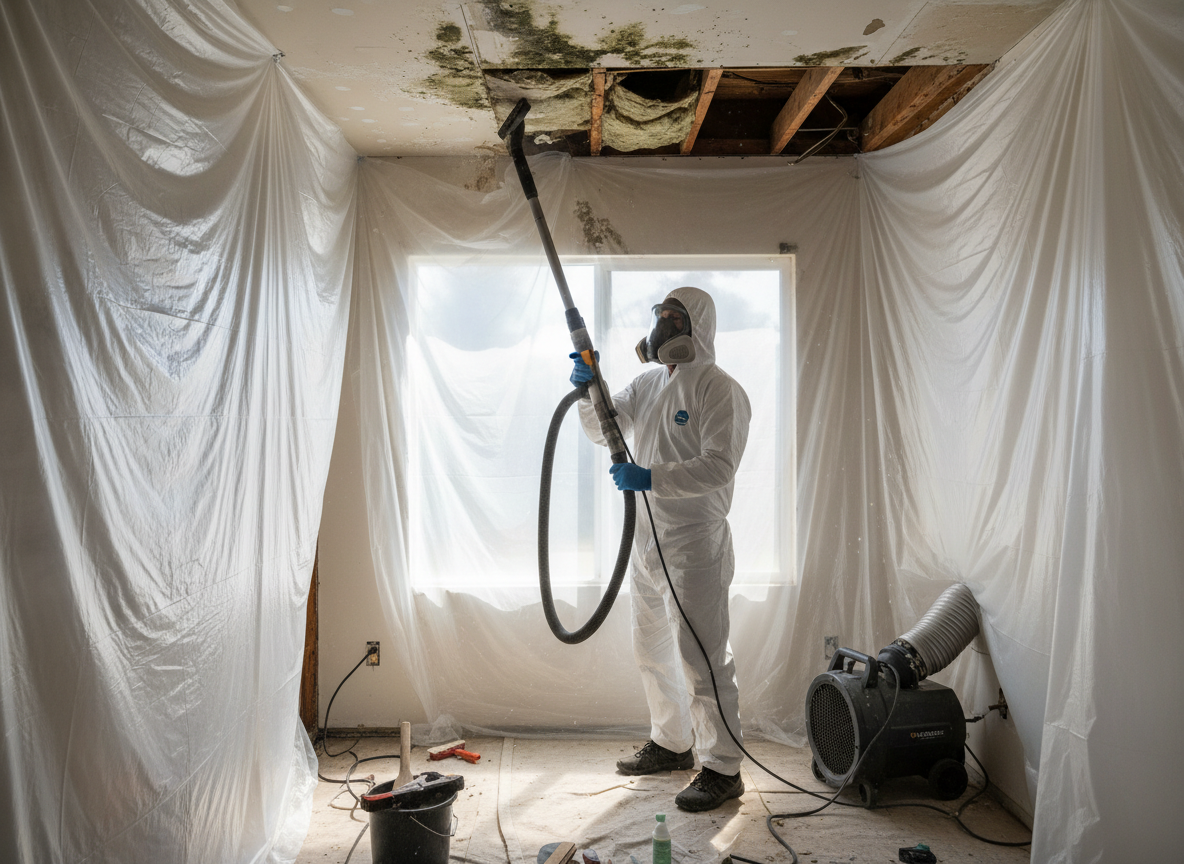
Abatement work here requires careful attention to Los Angeles County building practices. Crews must isolate affected zones with sealed barriers because many Granada Hills properties sit close together in Knollwood and Mission Hills tracts. Removing contaminated drywall or insulation without disturbing settled spores demands negative air machines and HEPA filtration throughout the process. Post-removal verification includes moisture readings on concrete slabs common in Porter Ranch border homes.
Homeowners sometimes attempt surface cleaning only to see recurrence within weeks. In this climate, hidden pockets behind bathroom tile or under kitchen cabinets near the Granada Hills Recreation Center frequently harbor colonies that standard bleach misses. Proper abatement includes addressing the water source, whether from irrigation overspray or poor attic ventilation that traps summer heat and residual dampness.
Work in these older tracts also means coordinating with local disposal rules for contaminated materials. Trucks leave the site at 11118 Balboa Blvd and return with fresh containment supplies as needed, keeping projects contained to single-family lots without affecting neighboring properties.
Technician insight
In Granada Hills, the thing that catches most people out with mold abatement is how 1950s stucco homes on slight slopes near O'Melveny Park let irrigation water pool against foundations during the mild winters. Homeowners notice the smell only after the first hot summer week, by which time the colony has already spread behind the exterior wall sheathing.
Attic Mold After Roof Leak Near Granada Hills Recreation Center
A homeowner in a 1962 tract home noticed musty odors in the upstairs hallway. Inspection found water intrusion from a cracked roof valley that had soaked insulation above the master bedroom. Containment was erected, wet materials removed, and the space dried before new insulation was installed. Follow-up checks confirmed levels returned to normal.
How it works
- 1
Initial Assessment
Technicians arrive 24/7 to inspect attics, crawlspaces, and wall cavities in Granada Hills homes using moisture meters and borescopes.
- 2
Containment Setup
Plastic barriers and negative air pressure isolate the work zone to prevent spore migration into living areas of Knollwood properties.
- 3
Source Removal
Contaminated drywall, insulation, and trim are cut out and bagged for proper disposal following Los Angeles County guidelines.
- 4
Drying and Verification
Industrial dehumidifiers and air movers dry the structure before final air sampling confirms safe levels.
Pricing
Cost depends on square footage affected, accessibility in crawlspaces or attics, and whether hidden damage extends into multiple rooms. Upfront quotes are provided after the initial inspection.