Granada Hills homes built in the 1950s and 1960s often feature stucco exteriors and slab foundations that trap moisture from the warm Mediterranean summers. When mold grows behind baseboards or in wall cavities near O'Melveny Park, the resulting musty smell travels through HVAC systems into living spaces. Odor removal requires locating the actual growth rather than masking smells with sprays, because the region's mild winters allow damp conditions to persist without obvious leaks.
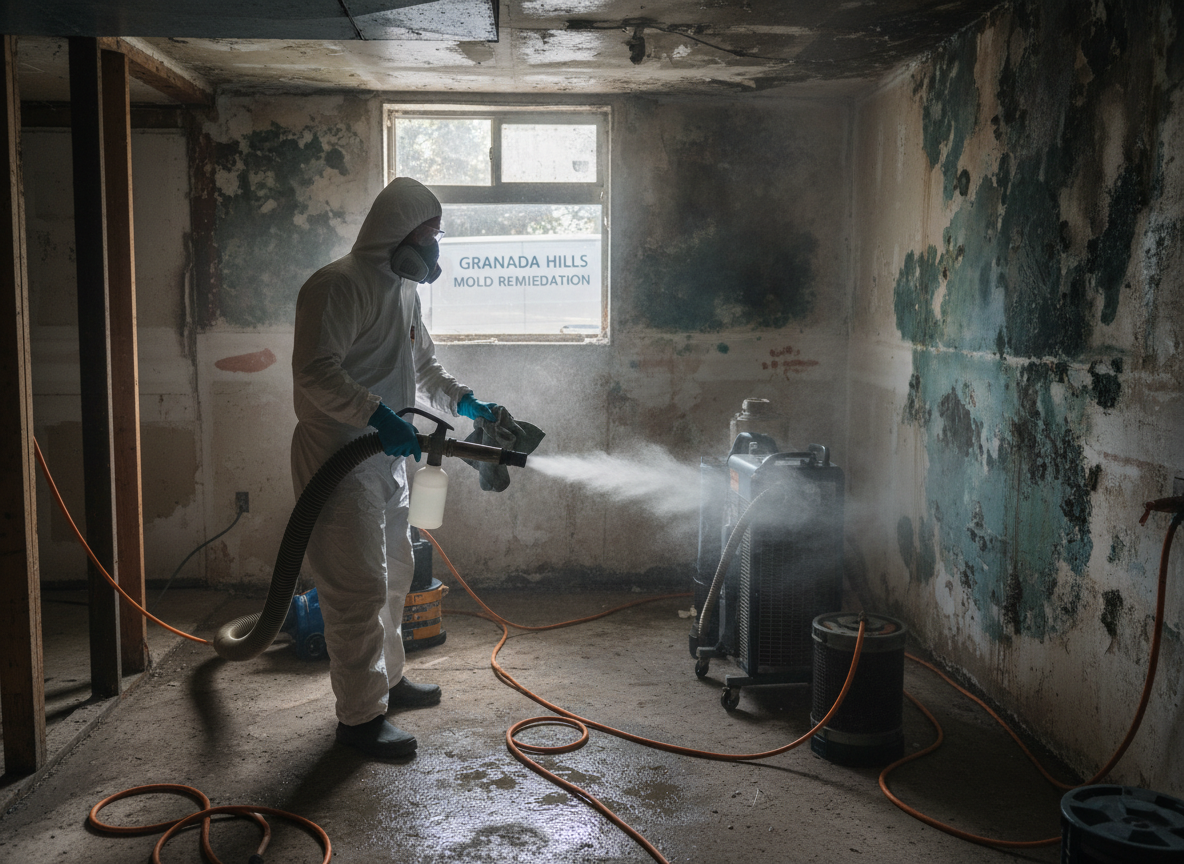
In Knollwood and adjacent Northridge neighborhoods, many properties sit on slight slopes where irrigation runoff collects against foundations. This creates hidden colonies inside crawlspaces or under subfloors that standard cleaning misses. Effective odor removal combines HEPA air scrubbing, antimicrobial fogging, and targeted removal of affected porous materials like drywall and carpet padding. Technicians must also check ductwork, as spores circulate through older forced-air systems common in Granada Hills tract homes.
Los Angeles County building practices from earlier decades left many residences without modern vapor barriers. After visible mold is addressed, residual odors can remain in insulation or wood framing for weeks. Proper odor removal includes post-treatment air sampling and, when needed, negative air pressure during work to prevent cross-contamination into unaffected rooms. Homeowners in Porter Ranch and Mission Hills frequently discover the issue only after selling, when inspectors flag musty smells.
Technician insight
In Granada Hills, the thing that catches most people out with odor removal mold is how irrigation water pools against 1950s slab foundations near the Recreation Center, letting smells linger in subfloor cavities long after surface cleaning. Homeowners often try bleach or ozone machines themselves, which only drives spores deeper into the stucco walls.
Hidden Odor in Knollwood Home
A family in Knollwood noticed a persistent musty smell after heavy summer watering. Inspection found mold colonies under the slab-edge carpet in a 1962 ranch house. We contained the room, removed the affected padding and drywall, treated the cavity, and ran HEPA units for two days. Air tests cleared the odor and the family moved back in without further issues.
How it works
- 1
Initial Assessment
Technician inspects affected rooms, HVAC, and hidden spaces in the Granada Hills property to locate odor sources.
- 2
Containment Setup
Plastic barriers and negative air machines isolate the work area to stop spores from spreading to other parts of the home.
- 3
Source Removal and Cleaning
Remove or clean contaminated materials, then apply antimicrobial treatments to surfaces and cavities.
- 4
Odor Neutralization
Use HEPA scrubbing and fogging agents to eliminate remaining smells in air and porous materials.
- 5
Final Verification
Air sampling confirms odors are gone before barriers are removed and the space is returned to normal use.
Pricing
Pricing varies by the extent of hidden growth, access to wall cavities, and whether HVAC cleaning is needed in older Granada Hills homes.