Granada Hills homes built in the 1950s through 1970s often feature stucco exteriors and crawlspaces that trap moisture during the warm Mediterranean summers when air conditioning runs constantly. Condensation forms on cooler pipes and ductwork, feeding hidden colonies behind walls and under flooring. In Knollwood and near O'Melveny Park, hillside drainage patterns direct winter rain toward foundations, allowing water to wick into older slabs and create persistent damp zones that standard fans never reach.
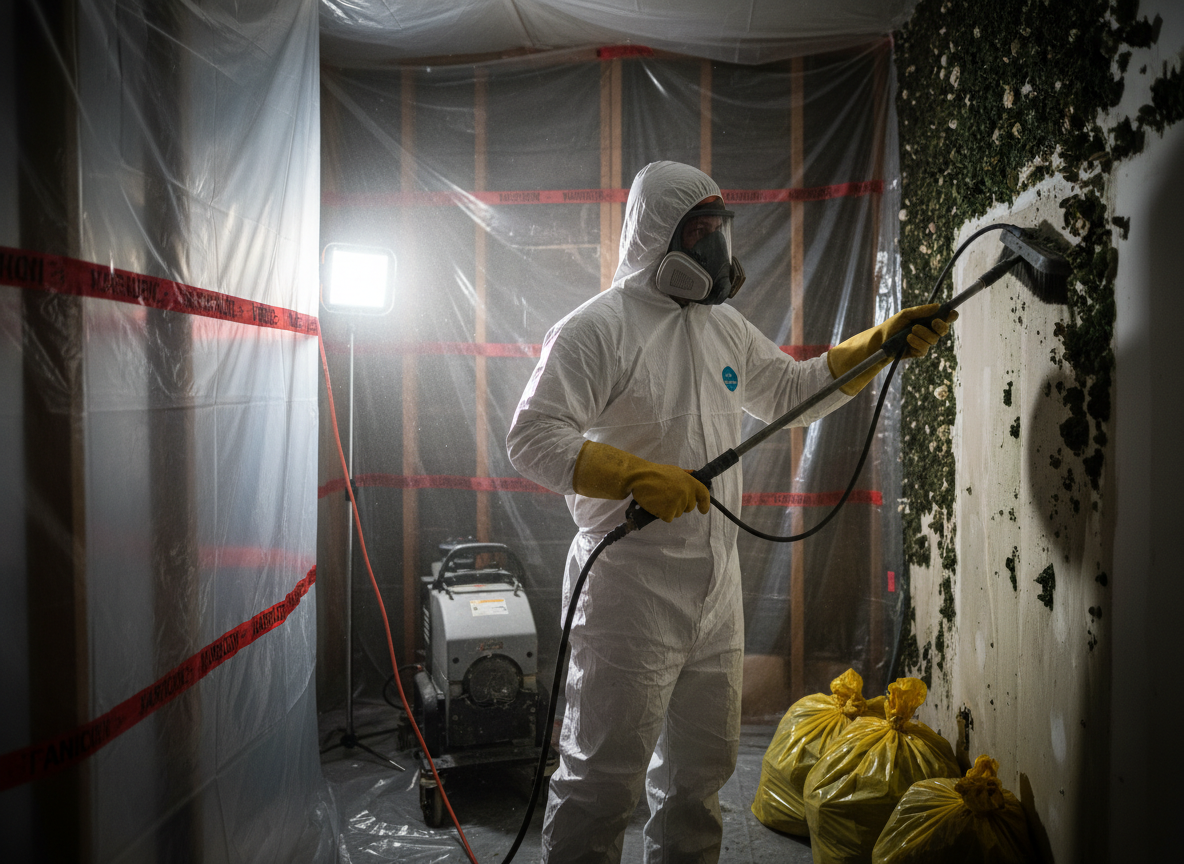
Toxic mold removal here requires full containment with negative air machines and HEPA filtration to prevent spores from spreading into living spaces during demolition. Affected drywall, insulation, and subflooring must be cut back well beyond visible growth, then treated with antimicrobial solutions matched to the mold species identified on site. Post-remediation verification includes moisture metering of remaining materials and air sampling to confirm levels have returned to normal before any reconstruction begins.
Los Angeles County building practices in this area frequently left minimal ventilation in attics and garages, so remediation crews routinely discover interconnected growth between living areas and storage spaces. Homeowners near Northridge and Porter Ranch borders sometimes see rapid spread after roof leaks because clay tile roofs on many Granada Hills properties shift during mild winter rains, allowing water to enter undetected for months.
Seasonal Moisture Patterns
Hot summer afternoons drive heavy AC use that cools interior surfaces faster than outdoor humidity can equalize, creating ideal conditions for mold on north-facing walls. Mild winters bring enough rain to test every flashing detail around windows and doors, especially on lots that slope toward Mission Hills.
Technician insight
In Granada Hills, the thing that catches most people out with toxic mold removal is water that travels under 1960s-era slabs from the slight slopes around O'Melveny Park. Homeowners fix the obvious ceiling stain but miss the fact that the same moisture has wicked sideways into adjacent rooms, so the job expands once we open the floor.
Hidden Growth After Summer AC Use
A family in Knollwood noticed a persistent musty odor in the hallway after running the air conditioner through a hot stretch. Inspection revealed black mold along the base of a shared wall where condensation had formed behind the stucco. Crews contained the hallway, removed the lower three feet of drywall on both sides, treated the framing, and dried the cavity for four days. Clearance testing allowed the family to move back in without further issues.
How it works
- 1
Initial Assessment
Technicians inspect all accessible areas, use moisture meters and thermal imaging to locate hidden water sources, and collect samples for lab identification of mold types.
- 2
Containment Setup
Plastic barriers and negative air pressure isolate the work zone so spores cannot migrate into unaffected rooms during removal.
- 3
Material Removal and Treatment
Contaminated drywall, insulation, and trim are removed and disposed of; remaining surfaces receive EPA-registered antimicrobials followed by HEPA vacuuming.
- 4
Drying and Verification
Industrial dehumidifiers and air movers dry the structure, then post-remediation testing confirms moisture and spore counts meet clearance standards.
Pricing
Pricing varies with the square footage of affected materials, accessibility of growth, and whether HVAC systems require cleaning.